
Ever wondered why two stones with similar names are so different in your home? Many think they’re almost the same, but they’re not. Knowing the fundamental differences is key to a great kitchen or bathroom update.
Choosing a countertop is more than picking a color. One is a natural wonder from the earth, while the other is made for today’s needs. The quartz vs quartzite choice can seem tough, but it’s not.
Learning how these materials handle daily use helps you choose the best. We’ll look at their origins, care needs, and how long they last. Let’s sort out the confusion and guide you to a confident decision for your home.
Understanding the Fundamental Differences Between Quartz and Quartzite
To choose the right countertop for your home, you need to know the key differences between quartz and quartzite. These two materials may sound similar, but they are quite different. One comes from nature, and the other is made by humans.
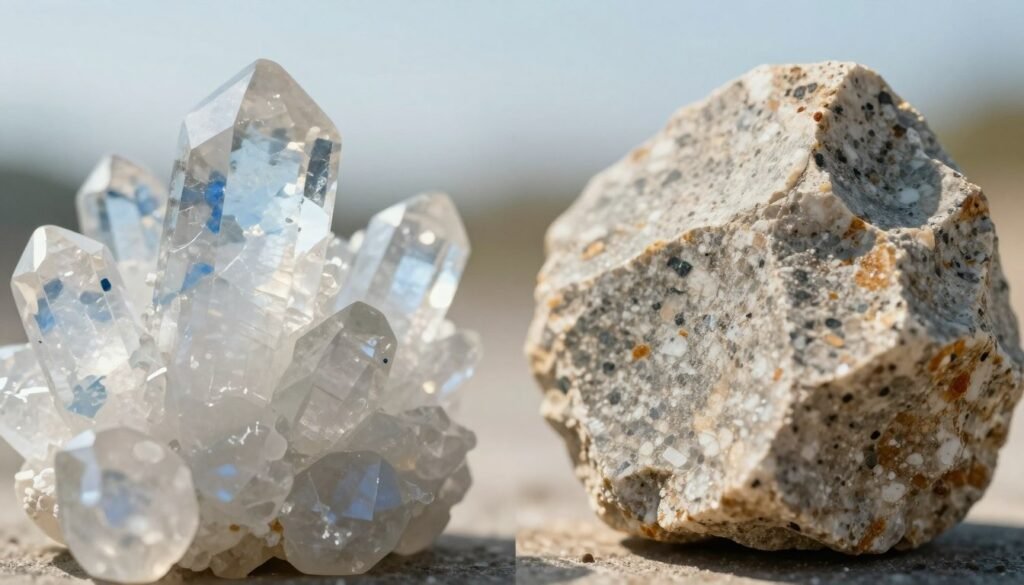
Geological Origins and Composition
Quartzite is a natural metamorphic rock. It starts as sandstone, which is then heated and pressed deep in the earth. This makes the quartz grains hard and dense.
Every slab of quartzite is unique, with its own veining and colors. It’s a pure geological creation mined from quarries worldwide. On the other hand, engineered quartz is made in factories, not found in nature.
Manufacturing Processes for Engineered Stone
Engineered quartz is made in factories. It’s made from crushed quartz, polymer resins, and pigments. This makes it consistent, unlike natural stone.
This process creates a non-porous surface that doesn’t need sealing. Here’s how these materials are made:
- Quartzite: Taken from the earth, cut, and polished.
- Engineered Quartz: Made from 90-95% ground stone and 5-10% resins and binders.
- Customization: Engineered stone can be colored and patterned to match, unlike natural stone.
Knowing these basics helps homeowners see why these materials are different. Quartzite brings authentic beauty of raw stone. Engineered quartz offers a durable, controlled choice for today’s homes.
Evaluating Quartz vs Quartzite Durability and Hardness
Choosing the right countertops is key for your home. When looking at quartz vs quartzite durability, both have their strengths for busy areas. Knowing how they handle daily use helps pick the best for your home.
Resistance to Scratches and Impact
Quartzite is a dense rock, making it tough against scratches. Its high quartz vs quartzite hardness beats many stones in kitchens. Yet, it can chip if hit hard on an edge.
Quartz is made from stone and polymer resins. It’s strong against impact and wear. But, the resin might show scratches more than natural stone if not cared for.
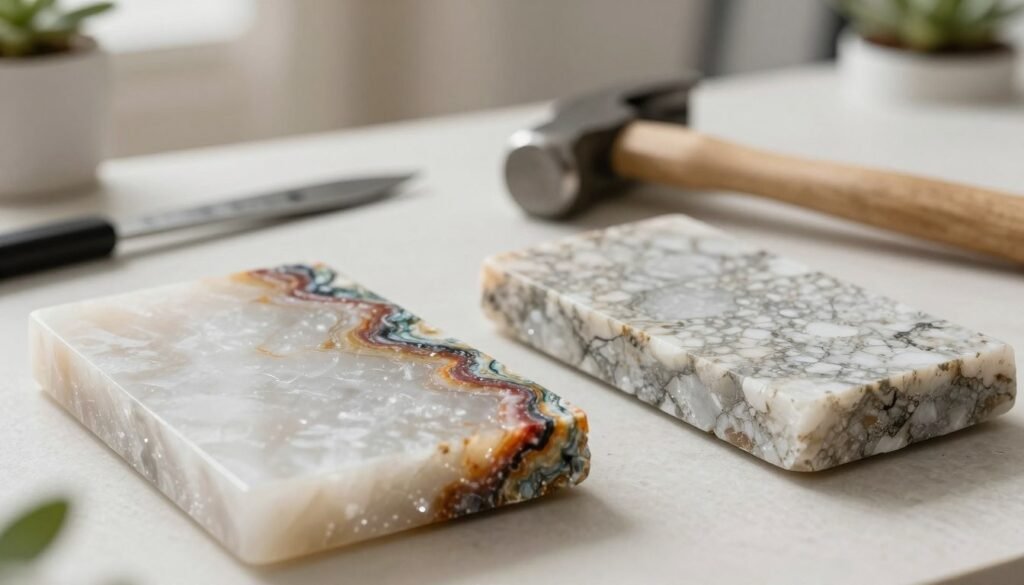
Heat Sensitivity and Thermal Damage
Heat handling is a big difference between quartz vs quartzite countertops. Quartzite can handle hot pans well, thanks to its natural formation. You can usually put a hot pot on it without harm.
Quartz, on the other hand, is sensitive to heat. The resins can melt or change color with too much heat. Always use a trivet or hot pad to protect your quartz from heat.
Porosity and Sealing Requirements
Quartzite is porous, needing a sealant to prevent stains. Regular sealing keeps it looking good for years.
Quartz is non-porous, making it easy to care for. It doesn’t need sealing and resists spills like wine and coffee. This low-maintenance quality makes quartz a favorite for many.
Comparing Aesthetic Options and Design Versatility
When looking at quartz vs quartzite colors, you see different ways they add beauty. Countertops greatly affect the look of your kitchen or bathroom. You need to find a balance between unique patterns and a unified design.
Natural Veining and Color Variations in Quartzite
Quartzite is made under intense heat and pressure, creating breathtaking, one-of-a-kind patterns. Because it comes from the earth, no two slabs are alike. You’ll find dramatic veining, crystalline structures, and deep color shifts that add luxury.
Those who love authentic, organic beauty often choose quartzite. Its colors range from soft whites and grays to bold, earthy tones. This makes your countertop a unique focal point in your home.
Consistency and Customization in Engineered Quartz
Engineered quartz focuses on uniformity and predictability. It’s made by mixing crushed stone with resins and pigments. This allows for precise control over the look, making it easy to match designs.
For a modern, minimalist look, engineered surfaces are great. They can look like marble or granite but are more predictable. This is perfect for large projects where uniformity is key.
Surface Finishes and Texture Choices
The finish you choose greatly changes your countertops’ look. A polished finish gives a shiny look that makes spaces feel larger. On the other hand, a honed or matte finish offers a softer look that hides marks well.
| Feature | Natural Quartzite | Engineered Quartz |
| Pattern Consistency | Highly Variable | Very Consistent |
| Color Range | Earth Tones | Unlimited Options |
| Finish Options | Polished/Honed | Polished/Matte/Leathered |
| Visual Depth | High (Crystalline) | Moderate (Pigmented) |
Knowing these differences helps you make a better choice. Whether you pick the elegance of natural stone or the versatile precision of engineered materials, your choice will shape your home’s atmosphere for years.
Analyzing Quartz vs Quartzite Cost and Installation Factors
Choosing premium countertops means balancing upfront costs with long-term benefits. The quartzite vs quartz price difference is big. It depends on the stone’s rarity and design complexity.
Material Pricing Trends in the United States
In the U.S., prices for these materials change due to supply and demand. Engineered quartz has a steady price because it’s made in controlled settings.
Natural quartzite prices can swing due to quarrying and shipping costs. Exotic slabs are pricier, making the quartz vs quartzite cost comparison key for budget-conscious buyers.
- Engineered Quartz: Costs between $50 to $120 per square foot installed.
- Natural Quartzite: Starts at $80, can go over $200 for rare types.
Labor Costs and Fabrication Complexity
Installation costs add up. Quartzite, being dense and natural, needs special tools and care to avoid cracks during cutting.
“The beauty of natural stone is undeniable, but the labor required to shape it correctly is a testament to the skill of the fabricator.” — Industry Expert
Quartzite’s hardness means higher labor costs for precise edges. Engineered quartz, being more uniform, is faster to make and cheaper to install.
Long-term Value and Resale Considerations
Looking at the quartz vs quartzite cost over time, think about durability. Quartz resists stains well, but quartzite’s luxury appeal is a big draw for high-end buyers.
| Feature | Engineered Quartz | Natural Quartzite |
| Initial Investment | Moderate | High |
| Fabrication Difficulty | Low | High |
| Resale Appeal | High | Very High |
When deciding between quartzite vs quartz price, think about your lifestyle. A high-quality material that fits your needs makes your kitchen valuable and beautiful for years.
Step-by-Step Guide to Choosing the Right Material for Your Home
Choosing between quartz vs quartzite countertops is more than picking a color. It’s about understanding your daily habits. The right surface keeps your investment looking great and functional for years.
Assessing Your Lifestyle and Daily Usage
First, think about how often you cook in your kitchen. If you love to cook and use acidic ingredients, consider how stones react to them.
Natural stone needs more care to avoid etching. Engineered surfaces, on the other hand, are more resistant to spills. Decide if you want a surface that needs careful handling or one that’s worry-free durable.
Determining Your Maintenance Tolerance
Everyone has a different comfort level with upkeep. When looking at quartz vs quartzite countertops, think about your maintenance habits. Do you want to seal your countertops regularly?
Quartzite needs sealing to protect against stains. If you don’t want to spend time on upkeep, engineered quartz might be better. Consistency in care is key to keeping your countertops looking new.
Matching Stone Characteristics to Room Functionality
The right choice depends on the room. A kitchen island faces different challenges than a bathroom vanity or laundry room.
In busy areas, choose materials that can handle heat and impact. For rooms where looks matter more, pick based on unique veining and color. Understanding the unique properties of quartz vs quartzite helps you make the best choice for your home.
Best Practices for Maintenance and Care
Protecting your investment is key, whether you have engineered stone or natural rock. Both materials are durable, but knowing the right care for quartz vs quartzite maintenance keeps them looking great for years.
Daily Cleaning Routines for Countertops
Keeping your kitchen looking new is all about consistency. A mix of mild dish soap and warm water works well for both surfaces.
Wipe down counters with a soft microfiber cloth after meals. Stay away from harsh chemicals, abrasive sponges, and scouring pads to avoid dulling the stone.
Preventing Stains and Etching
Even the toughest surfaces need care to stay in top shape. Clean spills right away, like acidic liquids like lemon juice, wine, or coffee.
Always use cutting boards and coasters to protect your countertops. These habits prevent scratches and etching, which are key when comparing quartz vs quartzite maintenance.
Professional Maintenance and Periodic Sealing
Engineered quartz doesn’t need sealing, but natural quartzite does. Apply a high-quality stone sealer to your quartzite surfaces regularly to keep them water-resistant.
Ask your fabricator about the best sealing schedule for your stone. Professional inspection every few years can catch small problems before they get big, keeping your kitchen looking and working well.
Conclusion
Choosing between quartz and quartzite depends on your lifestyle and design dreams. Each has its own benefits that affect your daily life and future value.
Engineered stone, like quartz, is perfect for modern kitchens because it’s consistent. Natural stone, like quartzite, adds unique beauty to your home. Knowing the pros and cons helps you pick the best for your home.
Think about how much care you want to give versus the look you want. Brands like Cambria or Silestone are great for busy homes. Local suppliers offer unique natural slabs for those who love organic looks.
Your renovation’s success comes from balancing practical needs with your budget. Visit showrooms and see slabs in person. This way, your choice will match your style and needs for years.
FAQ
What are the primary differences between quartz and quartzite?
Quartz and quartzite differ mainly in their origin and makeup. Quartzite is a natural rock formed from sandstone under intense heat and pressure. On the other hand, quartz is made from crushed quartz, polymer resins, and pigments by companies like Caesarstone and Silestone.
How does quartz vs quartzite durability compare in a high-traffic kitchen?
Both quartz and quartzite are tough, but in different ways. Quartzite is great against scratches and heat but can chip if hit hard. Quartz, being engineered, is more flexible and less likely to chip but can get damaged by extreme heat.
Which material is harder on the Mohs scale?
Quartzite is generally harder than quartz. It scores a 7 on the Mohs scale, beating glass and some steel. Quartz usually scores between 6 and 7. Despite both being harder than granite, quartzite’s natural density makes it a top choice for countertops.
What are the main quartz vs quartzite maintenance requirements?
Maintenance needs differ between quartz and quartzite. Engineered quartz, like Cambria, is non-porous and doesn’t need sealing, making it stain-resistant. Quartzite, being porous, needs a sealer at least once a year to prevent stains.
How do quartz vs quartzite colors and design options differ?
Colors and designs vary between quartz and quartzite. Quartzite offers a range of whites, grays, and earth tones with unique veining. Engineered quartz, like MSI Surfaces, provides a wide range of colors and patterns, including marble looks.
Is there a significant gap in quartzite vs quartz price?
Yes, there’s a price difference. Quartzite costs more, from $80 to over $200 per square foot, due to its rarity and cutting needs. Engineered quartz, priced between $60 and $150 per square foot, is more affordable for many.
Can I place hot pans directly on quartz vs quartzite countertops?
Be careful with both materials. Quartzite can handle hot items but may crack from sudden temperature changes. Quartz can melt or discolor above 300°F, so use trivets or hot pads.
Which material offers a better long-term return on investment?
Both materials increase a home’s value. Quartzite is seen as a luxury, appealing to those wanting “real” stone. Engineered quartz, known for its ease of cleaning, is popular in modern homes.
For more inspiration and ideas, visit: Hoome Estate
