
Ever felt like some outdoor spaces just hug you, while others feel cold? The magic often lies in the charm of a cottage garden. It’s all about loose, lush plants that spill over with life.
Learning how to create a cottage garden mixes old charm with new tricks. Pick the right plants to turn any land into a lively haven. It’s about letting nature shine, not controlling it.
Start with a clear vision for your garden. Before you start, plan out your dreams and see your property’s best spots. A good plan is key to a beautiful, balanced garden that shows off your style.
No matter the size of your space, this method works. With patience and the right plan, you’ll have a gorgeous, growing area that feels like part of your home.
Planning Your Cottage Garden Design
Starting a garden means having a clear plan. It’s about finding a balance between order and freedom. A good cottage garden design is like a map for a space that’s both wild and planned. By planning ahead, your garden will look full and inviting.
Defining the Cottage Style Aesthetic
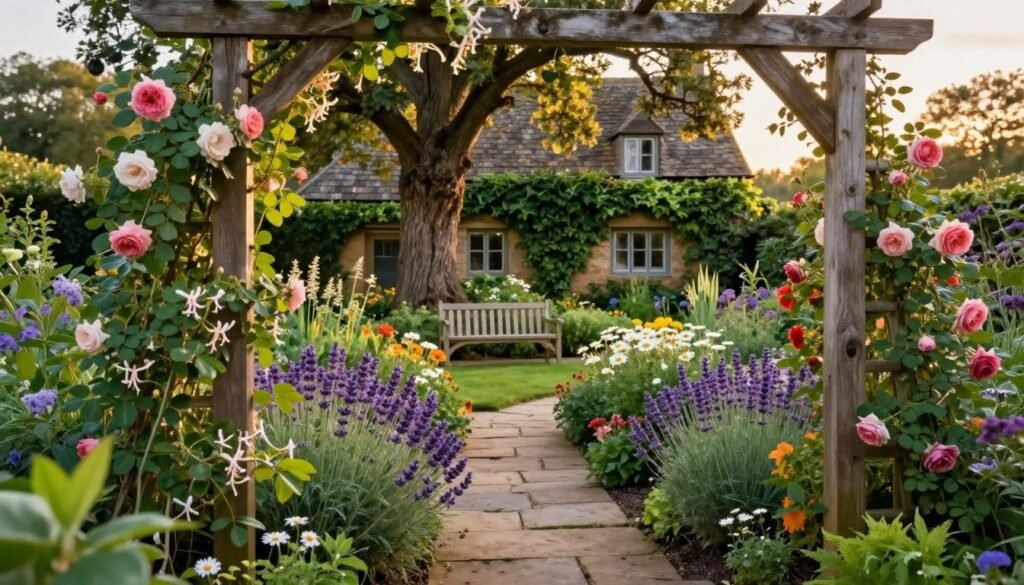
The cottage style is all about organized chaos. It’s different from formal gardens with straight lines. Instead, it celebrates overflowing plants and varied textures. You want your garden to feel like a part of your home, inviting people to explore.
To get this look, focus on these key points:
- Layering: Use plants of different heights to add depth.
- Abundance: Plant close together to cover the ground and fight weeds.
- Informality: Choose curved paths and uneven borders.
Assessing Your Yard and Soil Conditions
Before you start, know your land. The right plants depend on your environment. Watch how sunlight moves in your yard, as most flowers need at least six hours of sun.
Then, test your soil to see its pH and nutrient levels. Knowing your soil type—sandy, clay, or loamy—helps choose the best plants. Healthy soil is key for a lively garden, so don’t skip this step.
Drafting a Functional Cottage Garden Layout
A good cottage garden layout makes it easy to care for your plants while keeping it lush. Start by drawing your yard, marking off permanent features like fences and trees. Add winding paths that make you want to take your time.
Here are some tips for a successful layout:
- Create focal points: Use a bench or birdbath to catch the eye.
- Group in odd numbers: Plant in groups of three or five for a natural look.
- Leave room for growth: Plan for the size of shrubs and perennials to avoid crowding.
By focusing on these basics, you create a garden that gets more beautiful with time. Good planning makes gardening a joy, not just a chore.
Selecting the Best Cottage Garden Plants
Starting a vibrant landscape means picking the right cottage garden plants. Aim for a look that’s both full and intentional. Mixing different heights and textures turns any yard into a lush oasis.
Choosing Iconic Cottage Garden Flowers
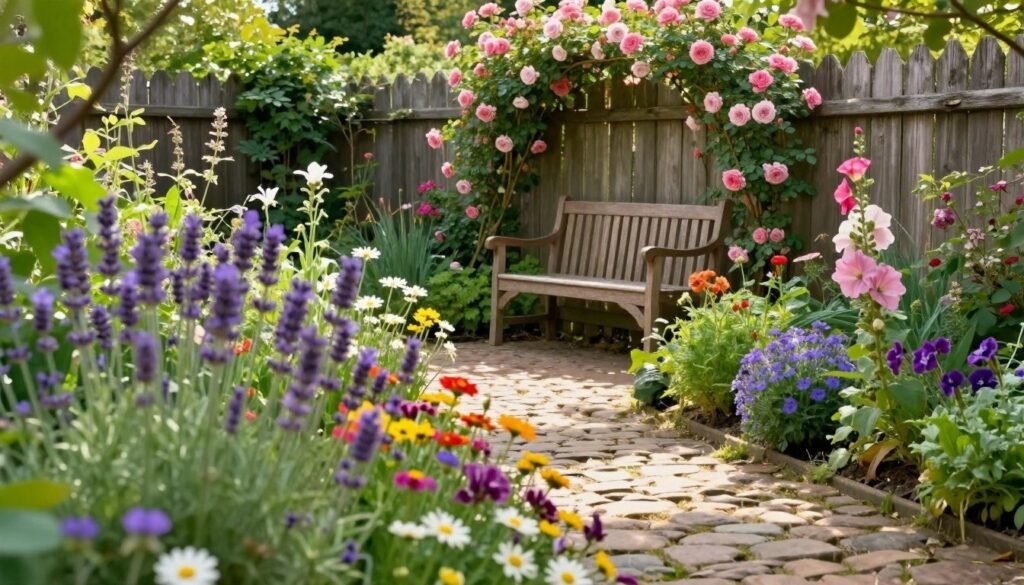
The essence of this style is in the classic cottage garden flowers. These blooms add color and charm, making the space welcoming and timeless.
Perennials for Long-Lasting Color
Perennials are key because they come back every year. Peonies, delphiniums, and foxgloves bring lasting beauty and height. These hardy plants keep your garden colorful all season.
Annuals for Seasonal Variety
Annuals fill gaps between perennials with seasonal energy. Zinnias, cosmos, and sweet peas offer continuous blooms. They let you try new colors each year, keeping your garden fresh until frost.
Incorporating Herbs and Edibles
A true cottage garden is both beautiful and practical. Tuck herbs like lavender, rosemary, and chives among flowers. They add scents and textures, and fresh ingredients for cooking.
Selecting Shrubs and Climbing Plants for Structure
Adding vertical interest keeps your garden from looking chaotic. Climbing plants like clematis or climbing roses can climb fences or walls. They create depth and define the classic look.
Shrubs anchor your beds with a permanent framework. Hydrangeas or viburnum provide a backdrop for smaller flowers. This mix of structure and softness balances your design.
Preparing the Soil and Planting Your Garden
Healthy soil is key to a thriving cottage garden. Before planting, make sure the soil has the right nutrients and drainage. Proper soil preparation saves effort later.
Soil Amendment Techniques for Lush Growth
Most soils need organic matter to improve their structure. Add compost, aged manure, or leaf mold to the top six to eight inches. This helps sandy soil hold moisture and heavy clay soil drain better.
Consistent soil health leads to a vibrant garden. Balance pH levels and add organic nutrients for flower growth. See the guide below for common amendments.
| Amendment Type | Primary Benefit | Application Method |
| Compost | Nutrient boost | Mix into topsoil |
| Peat Moss | Moisture retention | Blend with native soil |
| Garden Lime | pH adjustment | Spread and till in |
| Bone Meal | Root development | Add to planting hole |
Step-by-Step Planting Guide
Start by preparing your soil. Then, lay out your pots to plan your cottage garden. This helps you see the final arrangement and adjust spacing.
This style is known for its dense, lush look. Plant perennials closer than recommended for a full appearance. Strategic crowding reduces weeding and adds romance.
Layering Plants by Height
Depth is key for an interesting garden. Place tall plants at the back or center. Use medium shrubs in the middle and low-growing plants at the front.
This layered approach ensures sunlight for all plants. It creates a beautiful display that changes with the seasons.
Adding Hardscape Elements for Cottage Garden Inspiration
Thoughtful hardscaping is key to a beautiful garden. It adds both beauty and function all year. By mixing soft plants with solid materials, you can create a stunning outdoor space.
Choosing Natural Materials for Pathways
For a rustic look, choose natural materials for your paths. Gravel paths are great because they’re soft and drain well. Reclaimed stone or weathered brick also add a timeless charm.
These materials blend well with plants, making paths feel like part of the garden. When picking cottage garden ideas, choose materials that look good over time. This way, your paths stay charming without being a hassle.
Incorporating Decorative Garden Features
Decorative features make your garden inviting. They turn a simple yard into a special place full of personality.
Selecting Traditional Garden Benches
A bench is a cozy spot to relax. Choose materials like wrought iron or teak for a beautiful look as they age. A bench near flowers or under a tree makes a perfect intimate retreat.
Using Trellises and Arbors for Vertical Interest
Vertical elements add depth to your garden. Trellises support climbing plants, and arbors make a romantic entrance. These features make your garden feel mysterious and exciting.
Maintaining Your Cottage Style Landscaping
After planting, the real work starts. Keeping your garden healthy and looking good all year is key. With regular care, your cottage garden will stay vibrant from spring to autumn.
Watering and Mulching Best Practices
Watering your plants right is critical. Water them in the morning to cut down on evaporation and prevent mold. Deep, infrequent watering helps roots grow strong, making plants more drought-resistant.
Adding organic mulch is also essential. It keeps the soil moist and stops weeds. Using mulch like shredded bark or compost also improves the soil, which is key for a thriving garden.
Deadheading and Pruning for Continuous Blooms
To keep your garden looking lively, remove old flowers often. This is called deadheading. It tells the plant to focus on making new flowers instead of seeds. Many plants will bloom again, thanks to your care.
Pruning is also vital for your shrubs’ health. Cut out dead or damaged branches to improve air flow and prevent disease. Regular maintenance keeps your plants looking neat and charming.
Managing Pests and Weeds Naturally
Keeping your garden healthy often means less work. But sometimes, you need to step in. Use eco-friendly methods to protect your plants. Encourage good bugs like ladybugs to fight off pests.
Hand-pulling weeds is the best way to keep your garden clean. A thick layer of mulch also helps stop weeds. These simple steps are the heart of a lasting, eco-friendly garden.
Conclusion
Creating a vibrant cottage garden adds timeless charm to your home. It’s all about your personal touch, making it a living tapestry that changes with the seasons.
You now know how to pick the right plants and prepare your soil. Every choice makes your garden unique.
Embracing a relaxed approach to gardening can be rewarding. Let your flowers spill over paths and mix textures for that special look. Your garden will become a fragrant retreat, welcoming pollinators and providing peace.
Watch how your plants grow and adapt to your area. Gardening is a journey of discovery that gets better with time. Share your progress with gardening groups or neighbors to inspire others.
Begin your planting project today and see your vision come to life. A well-cared-for cottage garden brings endless joy and beauty all year round.
FAQ
What are the primary characteristics of a classic cottage garden design?
A classic cottage garden design is known for its informal structure and dense planting. It has a romantic, “organized chaos” look. Unlike formal gardens, it doesn’t have straight lines or symmetry. It uses winding pathways and a mix of ornamental and edible plants. Brands like White Flower Farm focus on fragrance, soft textures, and various flower shapes. This creates a lush, sensory experience.
What are the best cottage garden plants for achieving a year-round bloom?
To keep your garden colorful all year, choose a mix of cottage garden plants. Use hardy perennials like Peonies, Delphiniums, and Phlox for reliable blooms. Add cottage garden flowers like Zinnias and Cosmos from Burpee Seeds for summer color.Don’t forget climbing roses—like those from David Austin Roses—for vertical interest and English charm.
How can I develop a functional cottage garden layout in a small backyard?
Start your cottage garden layout by defining main paths with natural materials like stepping stones or weathered brick. Use vertical space with trellises and obelisks for vines. This keeps the ground clear for smaller plants.Layer plants by height, placing taller ones like Foxgloves in the center or back. Use low-growing herbs at the front for depth without overwhelming a small space.
What are the essential first steps in how to create a cottage garden?
The first step in how to create a cottage garden is to assess your site conditions. Check sun exposure and soil drainage. Once you know your environment, amend your soil with organic matter like Miracle-Gro Performance Organics.This provides nutrients for dense growth. Then, create a vision that balances hardscape elements, like a rustic garden gate, with your favorite flowers.
Where can I find cottage garden inspiration for decorative hardscaping?
For real cottage garden inspiration, look at the designs of Gertrude Jekyll or Sissinghurst Castle. Add weathered wood benches, antique birdbaths, and wrought-iron arbors for structure. Using reclaimed materials makes your garden feel established and timeless.
For more inspiration and ideas, visit: Hoome Estate
