
Starting in the U.S. real estate market can be overwhelming for first-timers. You might feel lost with so many listings and financial terms. But, proper preparation makes this journey easier.
Our detailed house buying guide helps you understand the process. It keeps you organized and avoids common mistakes.
Knowing what to look for when buying a house gives you confidence. This approach helps you make smart financial choices that fit your future plans.
Whether you’re looking at neighborhoods or checking inspection reports, our what to look for when buying a house checklist helps. We aim to make your search simpler and help you find the right property.
Setting Your Financial Foundation
Getting your finances in order is the first step before looking at properties. A detailed home buying checklist focuses on your financial health. This helps you feel secure about your future payments.
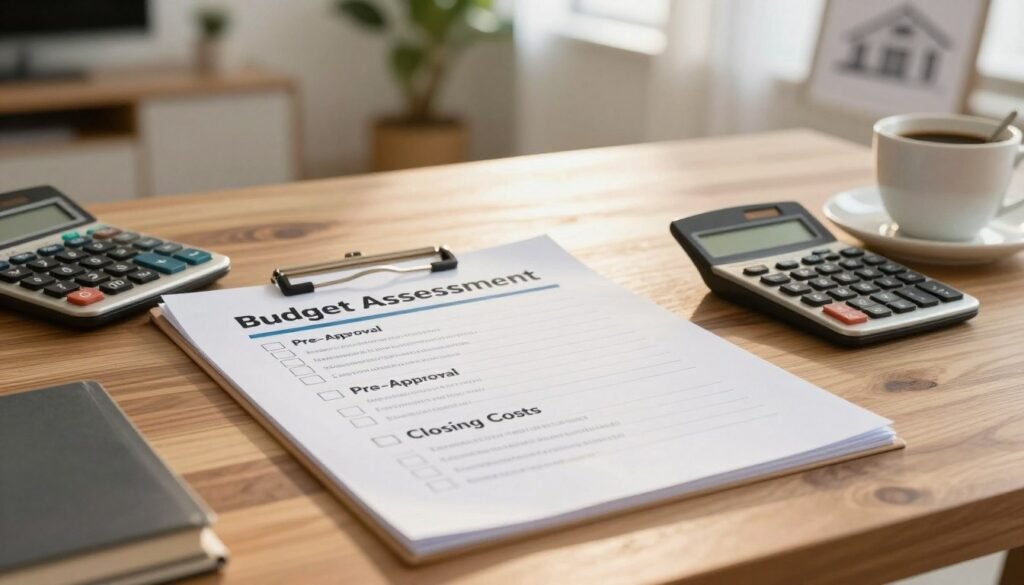
Determining Your Total Budget and Mortgage Pre-Approval
First, figure out how much you can spend on a home. Look at your savings, income, and debts. A good house buying guide can help with these numbers.
Getting pre-approved for a mortgage is key. It shows sellers you’re serious and have financing ready. This can help you stand out when there are many offers.
Accounting for Hidden Costs and Closing Fees
Don’t just look at the home price. A complete real estate checklist includes extra costs. Think about property taxes, insurance, and maintenance. These costs are as important as your mortgage.
“A budget tells your money where to go instead of wondering where it went.”
— Dave Ramsey
Closing costs can be 2% to 5% of your loan. Save for these early on. Here’s a table of common costs you’ll face.
| Expense Category | Estimated Range | Payment Timing |
| Down Payment | 3% – 20% | At Closing |
| Closing Fees | 2% – 5% | At Closing |
| Home Inspection | $300 – $600 | Pre-Closing |
| Property Taxes | Varies by State | Monthly/Annual |
Include these costs in your home buying checklist to avoid surprises. Good planning makes your home buying journey smooth. If unsure, talk to a financial advisor.
The Complete What to Look for When Buying a House Checklist
Before you start looking at homes, you need a solid plan. A what to look for when buying a house checklist keeps you focused. It helps you avoid falling in love with a home that’s not right for you.
Defining Your Must-Haves Versus Nice-to-Haves
The best home buying checklist first lists what you really need versus what you’d like. Must-haves are things you can’t easily change, like the number of bedrooms or the school district. These are key to your daily life.
Nice-to-haves are things you can change later, like paint colors or kitchen styles. Focusing on the basics lets you see a home’s true value.
Prioritizing Location and Commute Requirements
Where you live is set after you buy. Your house hunting checklist should include how your commute affects your life. Look for homes near highways, public transit, and important services.
Living close to work or public transit saves time and money. Check how the neighborhood feels at different times to make sure it fits your lifestyle. A good location makes your daily routine easier.
Assessing Future Resale Value and Market Trends
Think about your home’s future value, even if you plan to stay. Look for signs of growth, like new projects or businesses. These signs suggest your home’s value will likely go up.
Watch how fast homes sell and if values are rising. Homes in stable, desirable areas are safer investments. By considering both your wants and the market, you make a smart financial choice.
Evaluating the Exterior and Structural Integrity
A thorough exterior inspection can save you thousands of dollars in unexpected repair costs later on. When you start your house hunting checklist, the physical condition of the property is key. Spotting structural issues early helps you make a smart choice before buying.
Inspecting the Roof and Foundation Condition
The roof protects your home from the weather. Look for missing shingles, sagging, or excessive wear. These signs might mean you’ll need to replace the roof soon.
Next, check the foundation for big cracks or shifts. While small cracks are normal, large ones can mean serious problems. Make sure the house is level and the foundation fits snugly with the siding.
Checking Siding, Windows, and Drainage Systems
Good home buying tips stress the need to manage moisture. Look for rot, warping, or loose siding that could let water in. Also, check that all window seals are tight and frames are not decaying.
Drainage is also key to protect your investment. Check the soil grading to make sure it slopes away from the foundation. Downspouts should also be far enough away to prevent water pooling near the base.
Identifying Signs of Water Damage and Pest Infestation
Water damage can be hard to spot at first glance. Look for discoloration or moss on exterior walls, which means dampness. These spots attract wood-destroying insects like termites or carpenter ants.
Watch for small holes in wood or sawdust near the foundation. If you see these signs, get a professional’s opinion before you finalize your house hunting checklist. This way, you know the property’s condition and can talk repairs with the seller.
Assessing Interior Systems and Layout
Looking inside a house tells you more than the outside does. The inside parts affect your comfort and money over time. A careful check helps avoid costly fixes later.
Testing Electrical, Plumbing, and HVAC Functionality
Begin your property inspection checklist by checking the basics. Turn on every light to see if they work. Use an outlet tester to check for safety.
Look for flickering lights or warm outlets. These signs mean there might be wiring problems.
Then, check the plumbing and HVAC. Run faucets to see if water pressure is good. Look for leaks under sinks. Listen for strange noises from the furnace or air conditioner.
Reviewing Floor Plan Flow and Room Utility
A good layout is as important as the home’s health. Imagine your daily life to see if the layout fits. A good house viewing checklist helps spot if rooms flow well.
Think about windows and how they let in light. Effective floor plans use space well. Bad designs waste space or make rooms awkward.
Evaluating Kitchen and Bathroom Modernization Needs
Kitchens and bathrooms are pricey to update. Check for old fixtures, cracked tiles, or water damage. Even if they work, think if they look good to you or if you’ll need to update them.
Use this table to check the condition of major systems:
| System Component | Typical Lifespan | Signs of Needed Repair |
| HVAC Unit | 15-20 Years | Loud noises, uneven heating |
| Water Heater | 8-12 Years | Rust, slow hot water recovery |
| Electrical Panel | 25-40 Years | Fuses, buzzing sounds |
| Plumbing Pipes | 20-50 Years | Low pressure, discolored water |
Keep this house viewing checklist with you. Remember, small cosmetic issues are easy to fix. But, serious mechanical problems need a pro. Always check the home’s structure and function first.
Researching the Neighborhood and Local Amenities
Finding the perfect home means looking at more than just the house. The community around it is key to your daily life. Adding these factors to your real estate checklist helps you make a smart choice for the future.
Analyzing School Districts and Community Safety
Even if you don’t have kids, school ratings matter. Good schools mean a strong community and better resale value. Check these ratings online before you decide.
Safety is also important. Look at crime stats to see how safe the area is. Use a house viewing checklist to note your thoughts on street lights and neighborhood upkeep.
Checking Proximity to Essential Services and Public Transit
How close you are to shops and services affects your daily life. Make sure you’re not far from grocery stores and pharmacies. Proximity to these services keeps your home desirable long-term.
If you use public transport, check the distance to stations or stops. Good transit saves time and cuts down on driving. Make sure the service times fit your schedule.
Navigating the Professional Inspection Process
Even if a house looks perfect, a professional inspection can reveal hidden issues. A trained expert uses a property inspection checklist to find defects not seen by others. This step is your last protection before a big financial investment.
Selecting a Licensed Home Inspector
Finding the right professional is key for a good assessment. Look for someone licensed in your state and certified by ASHI or InterNACHI. Experience matters, so ask for references and sample reports.
When choosing an inspector, consider these points for quality service:
- Check their active state license and insurance.
- Ask if they use a property inspection checklist.
- Find out their experience with similar homes.
- Make sure they provide a digital report with photos.
Interpreting the Inspection Report and Negotiating Repairs
After the inspection, you’ll get a detailed report on the home’s condition. It’s normal to feel overwhelmed, but focus on major issues. These could save you money in the long run.
You can use the property inspection checklist to talk to the seller. Here’s how to handle repair requests:
| Finding Type | Negotiation Strategy | Desired Outcome |
| Major Safety Hazard | Request immediate repair | Seller fixes before closing |
| Minor Cosmetic Wear | Accept as-is | No change to contract |
| System End-of-Life | Request price reduction | Credit toward replacement |
Your goal is to ensure the home is safe and works well. If the seller won’t fix major problems, you might need to rethink the purchase. Knowledge is power, and a detailed inspection helps you make a smart choice.
Conclusion
Buying a property is a big step that needs careful planning and attention to detail. You now have the key tools to move through the real estate market with ease and confidence.
Knowing what to look for when buying a house helps you steer clear of common mistakes. Using these home buying tips keeps your investment safe for the future.
Take your time in every step of your search. A careful approach keeps your finances safe and ensures your happiness in your new home.
Start by contacting local real estate experts or mortgage lenders like Rocket Mortgage or Wells Fargo. Your dream home is waiting for those who prepare well.
For more inspiration and ideas, visit: Hoome Estate
