
Slow pipes are a big problem for homeowners. Many turn to harsh chemicals, but they can harm your pipes. Learning how to unclog a drain without chemicals is a safer choice for your home.
Using eco-friendly drain cleaning methods keeps your pipes safe and your home healthy. These methods use common household items to clear blockages. Choosing these gentle solutions helps your pipes last longer.
This guide shows you how to use safe, non-toxic methods. You’ll see that keeping your pipes flowing doesn’t need harmful chemicals or expensive services. Follow these steps to fix your pipes and keep your home running well.
Understanding Drain Clogs and Safety
Learning about home maintenance starts with knowing how drains work and when they fail. Before you try to fix a slow sink or a clogged shower, you need to know the problem’s size. Knowing how to unclog a drain without chemicals is key to keeping your pipes and home safe.
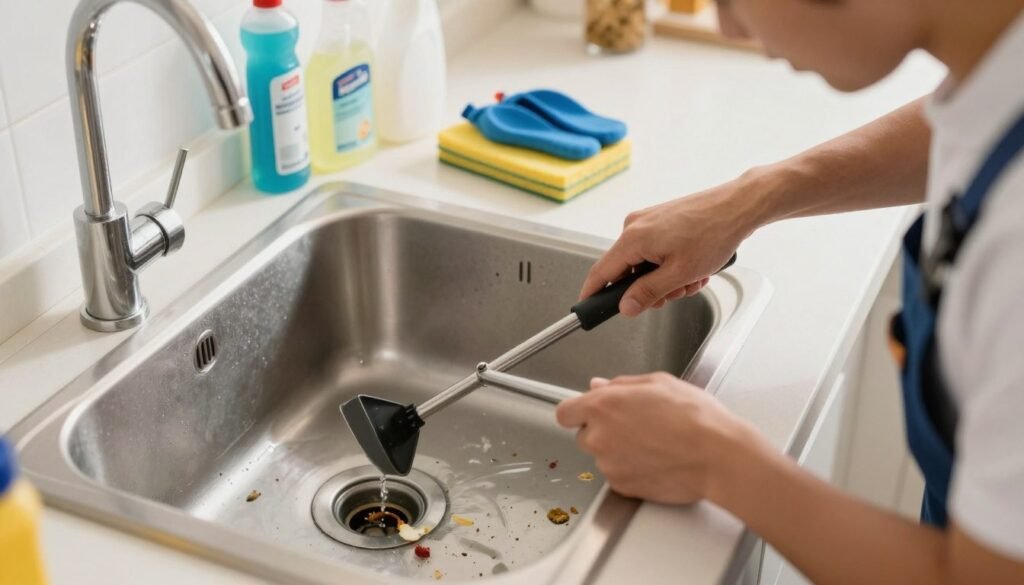
Identifying the Source of the Blockage
First, find out if the clog is in one place or everywhere. If just one sink is slow, the problem might be near the drain or in the P-trap. But if many fixtures are clogged, the issue could be further down in your sewer line.
Careful observation is your best tool here. Check other faucets to see if they work fine. If many are affected, you might need a pro, not just a DIY fix.
Safety Precautions Before You Begin
Always put safety first when dealing with plumbing. Wear gloves to protect your skin from pipe bacteria or debris. Also, clear the area of water to avoid slipping and keep your work area clean.
“An ounce of prevention is worth a pound of cure.”
Benjamin Franklin
When you’re ready to fix the clog, choose non-toxic drain cleaning solutions. Harsh chemicals can damage your pipes over time. Using safer, natural methods keeps your home healthy and fixes the water flow issue.
How to Unclog a Drain Without Chemicals Using Physical Tools
Manual methods are the best for clearing blockages safely and effectively. They use mechanical force instead of harmful chemicals. This way, you protect your pipes from damage. These diy unclogging tips are simple and anyone can do them at home.
Choosing environmentally safe drain unclogging techniques is good for your home. These methods keep your pipes safe and your home free from harmful fumes.
Using a Plunger Effectively
A plunger is a key tool for plumbing. Make sure you have the right plunger for the job.
Techniques for Sink Drains
For sinks, use a cup plunger. Fill the sink with water to cover the rubber cup. This creates a better seal. Place the plunger over the drain and pump hard for 30 seconds to clear the blockage.
Techniques for Toilet Drains
Toilet clogs need a flange plunger. It has a long rubber lip for the drain hole. Put the flange in and push down to make a vacuum.
“The secret to a successful plunge is the seal, not just the force,”
an experienced plumber says. Do this a few times, then pull back sharply to break the clog.
Removing and Cleaning the P-Trap
If plunging doesn’t work, the blockage might be in the P-trap. Place a bucket under the trap to catch water or debris. Remove the pipe section by unscrewing the slip nuts.
Clear out hair, soap scum, or solid objects from the pipe. Rinse it with warm water. Make sure the washers fit right to avoid leaks.
Utilizing a Plumbing Snake or Drain Auger
A plumbing snake or drain auger is great for deep blockages. It has a long, flexible cable to reach deep into pipes. Feed the cable into the drain until you feel resistance, then rotate the handle to hook the obstruction.
Pull the cable back to remove the blockage. These diy unclogging tips are reliable for tough clogs. Using these environmentally safe drain unclogging techniques keeps your plumbing system healthy and efficient.
Natural Drain Cleaning Methods with Household Ingredients
Many homeowners are surprised to find out that simple pantry ingredients can clear drains. Using common kitchen items is a great way to remove buildup without harsh chemicals. These natural drain cleaning methods are effective and safe for the environment.
The Baking Soda and Vinegar Reaction
The mix of baking soda and vinegar creates a fizzing reaction. Pouring half a cup of baking soda and then half a cup of vinegar into the drain works well. Covering the drain with a cloth for about fifteen minutes helps trap the pressure.
Using Boiling Water for Grease Buildup
Grease and oil can clog kitchen sinks. Boiling water melts these fats, making them easy to wash away. Pour boiling water down the drain in stages, waiting a few seconds between each pour.
Salt and Baking Soda Mixture for Slow Drains
If your sink drains slowly, try a salt and baking soda mix. Combine half a cup of each and pour it into the drain. Then, pour boiling water to flush out the loosened material. This is a reliable non-toxic drain cleaning solution.
Advanced DIY Unclogging Hacks for Stubborn Blockages
When your sink stays blocked after simple tries, these diy unclogging tips can help. Sometimes, debris gets stuck deep in the pipe, out of reach for standard plungers. In these cases, you need to think outside the box with items you already have at home.
Creating a Makeshift Wire Hanger Tool
A simple wire coat hanger is a great drain unclogging hack for reaching hair or solid debris. First, straighten the wire completely, keeping a small hook at one end. Carefully insert the hooked end into the drain opening.
Try to snag the blockage with the wire and pull it up. Be careful not to push the debris further down the pipe. This could make things worse. Once you feel resistance, slowly twist and pull to remove the material.
Using a Wet/Dry Shop Vacuum
If you have a wet/dry shop vacuum, it can provide the strong suction needed. Make sure it’s set to the liquid setting to avoid damaging the motor. Use a wet rag or a rubber attachment to seal the drain opening tightly.
Turn the vacuum on for a few seconds to create a strong vacuum effect. This often dislodges stuck items deep in the trap. Always monitor the suction to avoid pulling too hard on the plumbing joints.
The Dish Soap and Hot Water Method
For clogs caused by grease and oil, the dish soap and hot water method is very effective. Dish soap breaks down sticky fats that coat your pipes. Pour about half a cup of liquid dish soap directly into the drain.
Then, add a large pot of very hot, but not boiling, water. The heat helps to liquefy the grease, while the soap makes it easy to wash away. This simple mix often clears slow-moving drains without harsh chemicals.
Maintaining Your Pipes to Prevent Future Clogs
It’s easier to stop clogs before they happen than to deal with a clogged sink. Simple habits can keep your plumbing system working well for years. These proactive steps also mean less use of harsh chemicals and fewer expensive repairs.
Proper Disposal of Fats, Oils, and Grease
Fats, oils, and grease are big problems for your kitchen pipes. They cool and solidify, causing stubborn blockages. Never pour bacon grease or cooking oil down your sink.
Instead, put used grease in a sealable container and throw it away with your trash. This simple change stops buildup and keeps your pipes clear. It’s the best way to avoid big plumbing problems in your kitchen.
Installing and Cleaning Drain Strainers
Putting in a drain strainer is essential and cheap. These devices catch hair, food, and soap scum before they clog your pipes. Always empty the strainer after each use.
This is a form of eco-friendly drain cleaning because it keeps debris out of your system. Clean the strainer with warm water to keep it working well. It’s a small effort that makes a big difference for your pipes.
Regular Maintenance Flushing
Flushing your pipes regularly removes small residue before it turns into a clog. Use natural drain cleaning methods like hot water and baking soda once a month. This is safe for your pipes and the environment.
Regular care keeps your home healthy. By following these habits, your system will stay functional and efficient. Here’s a maintenance schedule to keep your drains in great shape.
| Maintenance Task | Frequency | Primary Benefit |
| Empty Drain Strainers | Daily | Prevents debris buildup |
| Hot Water Flush | Weekly | Dissolves soap residue |
| Natural Deep Clean | Monthly | Maintains clear flow |
When to Call a Professional Plumber
Knowing when to stop DIY efforts is key. Simple tools work for minor blockages. But, deep problems need a pro to avoid damage. Drain unclogging hacks help with surface issues, but deep problems need special tools.
Signs of Deep Sewer Line Issues
Watch out if many drains back up at once. This means a big problem in the main sewer line. Also, foul odors from your yard or basement hint at a serious pipe issue.
Water pooling around floor drains or gurgling sounds when flushing are warning signs. These show your plumbing is facing a big problem. At this point, environmentally safe drain unclogging techniques won’t help.
Dealing with Persistent or Recurring Clogs
If a drain keeps clogging after you clear it, the problem is deeper. Issues like tree roots or collapsed pipes need a pro’s camera to find. A plumber can find and fix the real problem, saving you time and trouble.
Knowing when to call a pro is important for your home. Recognizing when DIY methods won’t work protects your plumbing. Experts ensure your home stays safe and working well for years.
| Issue Type | DIY Suitability | Professional Required |
| Single Sink Slowdown | High | Rarely |
| Multiple Drain Backups | Low | Always |
| Foul Sewer Odors | None | Always |
| Recurring Minor Clogs | Moderate | Often |
Conclusion
Keeping your home’s plumbing healthy is easier than you think. You can handle small clogs with basic tools and safe, natural items.
By taking care of your pipes regularly, you can avoid big problems. A good vinegar and baking soda mix is great for keeping drains open. It’s better than harsh chemicals found in stores.
Make maintenance a part of your routine to dodge future troubles. Simple steps like using drain strainers and throwing away grease safely help a lot. If these fixes don’t work, call a pro from Roto-Rooter or Mr. Rooter Plumbing.
With regular care and the right tools, your pipes will last longer. Always have your vinegar and baking soda mix on hand for slow drains. Learn these skills to keep your home’s systems working well for years.
What is the most effective way to learn how to unclog a drain without chemicals?
The best way is to use tools and natural cleaners. First, try a plunger or a plumbing snake to remove blockages. For organic clogs, a vinegar and baking soda mix works well. It creates a foamy reaction that breaks down debris without harming your pipes.
Are home remedies for clogged drains safe for all types of plumbing?
Yes, most natural cleaners are safer than harsh chemicals. They won’t damage your pipes like commercial cleaners can. Using boiling water or a salt and baking soda mix is safe and effective for minor clogs.
How do I use a vinegar and baking soda drain cleaner correctly?
Start by pouring half a cup of baking soda down the drain. Then add half a cup of white vinegar. Cover the drain to keep the reaction in. After 15–30 minutes, flush with boiling water to clear the clog.
What are some advanced drain unclogging hacks for stubborn hair clogs?
If a plunger doesn’t work, try a wet/dry shop vacuum to suck out the clog. Or make a tool from a wire hanger to remove hair clumps. For bathroom sinks, removing the P-trap can be the most effective method.
Which non-toxic drain cleaning solutions work best for kitchen grease?
For grease clogs, mix dish soap with hot water. Squirt a grease-cutter like Dawn Dish Soap down the drain, then slowly add hot water. The soap and heat break down the grease, allowing it to flow freely.
What are the best eco-friendly drain cleaning habits to prevent future issues?
To prevent clogs, use high-quality drain strainers and avoid pouring FOG down the sink. Regularly flushing with hot water and baking soda keeps your pipes clear and smelling fresh.
When should I stop attempting diy unclogging tips and call a professional?
Call a pro if you have recurring clogs or water backs up when you run the washing machine. These signs indicate a deeper issue that needs professional tools and expertise.
For more inspiration and ideas, visit: Hoome Estate
